Eleu
The permanent institution
Holds the purpose, relationships, institutional memory and governance.
Eleu is a permanent consilium of up to nine family offices who originate and govern long-duration initiatives together.
Most capital enters after the important choices have already been made. The structure exists, the mandate has been written, and the opportunity has been shaped by somebody else.
Eleu works earlier.
It brings a small group of family offices together to identify important long-term problems, shape the institutions and capital structures required to address them, and govern the resulting work over time.
The institution is permanent. The work it originates can begin, evolve and end.
Eleu centralises judgement, governance and coordination.
Some of the most important opportunities do not fit neatly inside a single institutional mandate.
They may require governments, philanthropy, development capital, private investment, operators and long-term owners to move in sequence.
The capital often exists. What is missing is the coordination required before that capital can act.
Family offices are unusually able to work across those boundaries. They can combine long time horizons, direct relationships, independent judgement and different forms of capital without being confined to one mandate.
Eleu gives that capability an institutional form.
The constraint is often not capital. It is the architecture that allows capital and institutions to act together.
Eleu
Holds the purpose, relationships, institutional memory and governance.
The Principal Table
Sets direction, sanctions major work and contributes judgement, expertise and relationships.
Commissions
Defined long-term initiatives with a mandate, accountable leadership, milestones and decision gates.
Execution
Companies, partnerships, SPVs or other structures are created only where the Commission requires them.
Capital participation in an Eleu-originated initiative never creates additional authority at the Eleu table.
Process / From problem to Commission
A structural problem or opportunity is brought to the table because there is a credible reason Eleu may be able to change the outcome.
The thesis is challenged. We ask why Eleu is needed, who must be involved, what could make the work fail, and whether another institution is better placed to do it.
If the case survives, the Table defines the mandate, leadership, milestones and boundaries of the work.
The Commission develops the partnerships, capital architecture and execution structures required to make the work real.
Not every idea becomes a Commission. Continuing work has to keep earning its place.
Eleu acts through a small number of long-duration commissions. Each is developed privately and named only when its mandate, counterparties and governance are ready.
 I
IMandate, partners and structure being developed.
Named when ready
 II
IIMandate, partners and structure being developed.
Named when ready
 III
IIIHeld for the next initiative the founding Principal Table chooses to carry.
Chosen by the founding Principals
A Commission is adopted only where Eleu has a distinctive role, the work requires long-term coordination, and the Principal Table is materially relevant to the outcome.
Eleu is deliberately capped at nine family offices. Small enough for every person to participate directly in judgement and governance. Large enough to bring genuinely different experience, relationships and perspectives to the same table.
01
A seat belongs to an individual, not their family office or institution.
02
One Principal, one vote. Wealth, capital committed and downstream economics do not change authority.
03
A seat is not honorary. Principals are expected to materially advance the institution and its work.
04
Eleu is designed to compound relationships, judgement and institutional memory over decades rather than transactions.
Eleu is for family-office principals with independent judgement, a long horizon and something distinct to contribute to the table.
They may bring institutional experience, sovereign relationships, industrial expertise, technology, philanthropy, systems thinking or capital.
What matters is not simply what someone controls. It is what becomes possible because they are at the table.
Eleu is not built around deal flow, access, status or passive allocation. A seat carries responsibility to the institution and its work.
Economic participation never creates additional governance rights.
Eleu is not a membership organisation and does not scale by adding seats.
Commissions can begin and end. Eleu retains the relationships, judgement and institutional memory.
Principals participate personally rather than as representatives of a fund, company or family office.

Co-Founder
Co-Founder
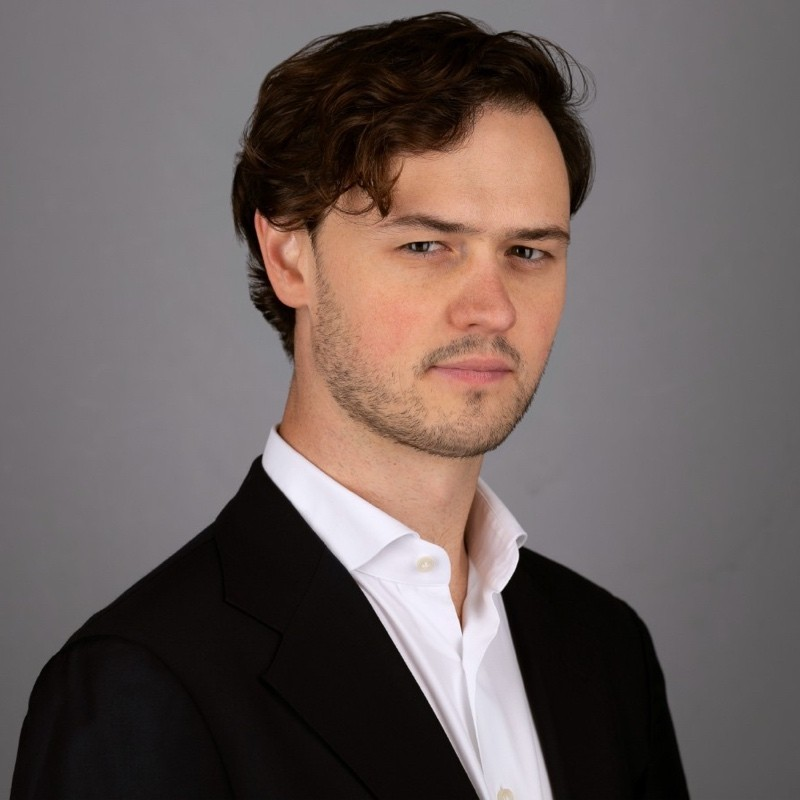
Oliver and Bradford are building the founding Principal Table and carrying Eleu through its formation. As the institution develops, governance increasingly moves to the Table.